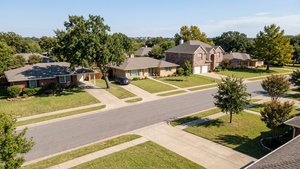
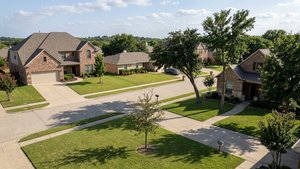
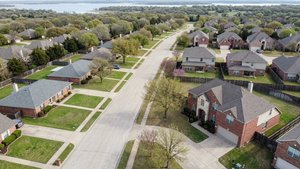
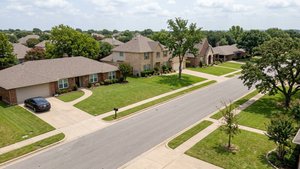
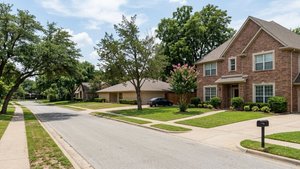
Grapevine sits in the Mid-Cities region between Dallas and Fort Worth, which makes it a natural landing spot for commuters. The city is located primarily in Tarrant County, with small sections extending into Dallas and Denton counties. Anyone buying a home in Grapevine, TX will find a market shaped by two dominant anchors: DFW International Airport to the southeast and Grapevine Lake to the north.
The median home price is currently around $631,000, and properties don't sit long - homes are spending roughly 24 days on the market before going under contract. Getting the right area comes down to balancing your budget against the type of housing you want, whether that's an older home near Main Street or something in a master-planned community with an HOA running the amenities.
How Grapevine is Laid Out
Grapevine is part of the broader Dallas-Fort Worth-Arlington metropolitan area, and its geography is harder to ignore than in most cities. DFW Airport borders it to the southeast. Grapevine Lake sits to the north. Those two landmarks aren't just scenery - they set the ceiling on where development can go and they shape daily drive times depending on which part of the city you're in.
Most residential areas fall into distinct pockets separated by commercial zones and State Highway 114 cutting through the middle. Central Grapevine carries older, established homes close to retail and dining. Get closer to the lake or the airport and you're looking at different price points and different lot sizes.
City Organization and Zoning
The city is divided into several geographic zones, from historic districts to newer subdivisions - and the edges can get blurry where Grapevine bleeds into neighboring municipalities. Worth double-checking if you're looking near the city limits.
School attendance zones drive a lot of search parameters here. Most of the city is served by the Grapevine-Colleyville Independent School District (GCISD), which also covers parts of Euless, Hurst, and Southlake. Don't assume a street address automatically tells you which campus you're zoned for - verify it on the district's official attendance maps.
Mapping Out Local Areas
Without a map in front of you, it helps to think of Grapevine in three sections: central, north, and southeast. State Highway 114 runs through the middle and acts as a dividing line for several subdivisions.
The northern section is dominated by Grapevine Lake, a large reservoir managed by the Army Corps of Engineers. Neighborhoods up there tend to have mature trees and larger lots. The southeast corner is a different story - it borders DFW Airport and Grapevine Mills, which spans nearly 1.8 million square feet and is the largest mall in Tarrant County.
Central and Historic Districts
The center of the city revolves around Historic Downtown and Main Street - a well-known North Texas destination with an urban wine trail, restaurants, and shopping. The residential streets branching off Main Street carry older housing stock, mostly built from the 1970s through the 1990s.
Homes in this central corridor generally range from $350,000 to $500,000. If walkable access to local businesses matters to you, this is where you'd focus. The trade-off is a smaller footprint and older construction compared to what you'd get on the city's outer edges.
Home Types and Pricing by Area
The local inventory includes detached single-family homes, townhouses, and master-planned developments. One number worth knowing: sale-to-list ratios are running around 99.2%, which means homes are consistently selling very close to asking price. That's not a market where you come in low and see what happens.
Attached homes and condos offer a lower entry point and tend to cluster near commercial centers or major transit routes. Detached single-family homes make up the bulk of what's available, and pricing scales based on lot size and whether you're closer to the lake or Historic Downtown.
Established Subdivisions vs. Newer Builds
Older subdivisions near the lake - Timberline and Lakewood Hills among them - offer established environments with mature landscaping. Homes in those lake-adjacent neighborhoods typically price between $400,000 and $550,000.
Newer construction and master-planned communities are harder to find in the denser central districts. Where they do exist, they usually come with homeowner associations that maintain shared amenities like pools and trail systems. That's either a selling point or a recurring line item in your budget, depending on how you look at it.
Specific Communities to Consider
Rather than ranking neighborhoods, it's more useful to look at what each part of Grapevine delivers in concrete terms - commute times, home prices, property types. Every section of the city has a different real estate profile, and the right fit depends on what you're optimizing for.
Commuters tied to DFW Airport tend to look at the southeast quadrant. Buyers who want larger lots usually focus on the northern subdivisions near the reservoir.
Silverlake
Silverlake is an established master-planned community located centrally within the city. Homes here are typically priced between $450,000 and $650,000, and the neighborhood includes community pools, local trails, and shared amenities. Everything in this subdivision is zoned to GCISD.
Southeast Grapevine
The neighborhoods in Southeast Grapevine sit close to DFW Airport and Grapevine Mills, and they offer some of the more accessible entry points in the local market - typical prices range from $350,000 to $450,000. Quick highway access is a real advantage here, and these homes are also zoned for GCISD.
One thing you need to weigh honestly: airplane noise. The airport runways are close, and that's not something you tune out after a few weeks.
Housing Market Costs and Local Data
The median sale price recently came in at approximately $631,000. Inventory is tight - about 2.8 months of supply currently available - and the pace reflects it. Homes are spending a median of 24 days on the market, roughly 32% of properties are selling above list price, and strong offers aren't optional, they're baseline. Zip code 76051 shows a median household income of around $111,000, which gives you a reasonable sense of the area's economic profile.
Researching Local Crime Data
For safety statistics, go to official sources first. The Grapevine Police Department provides online services where residents can view neighborhood crime information. For broader regional data, the city falls primarily under the jurisdiction of the Tarrant County Sheriff's Office, overseen by Sheriff Bill E. Waybourn. Third-party tools like SpotCrime also aggregate incident reports, trends, and alerts by specific Grapevine address if you want another layer of detail.
Finding Your Next Home
With only about 121 homes available at any given time, you don't have the luxury of a leisurely search. Knowing which neighborhoods you want before you start touring isn't just helpful - it's necessary.
Renting is worth considering if you're not ready to commit. Three-bedroom rents range from $2,600 to $3,200 monthly, which can give you a temporary base to learn the local roads and figure out which subdivision fits how you live.
Working with a Local Professional
A local agent can track down specific property types - older homes near Main Street, houses bordering Grapevine Lake, whatever your target looks like - and pull recent sales data for the subdivisions you're considering. That sales data matters more than you'd think in a market where 32% of homes are going above list.
Make sure whoever you work with understands the GCISD attendance zone nuances and the specific HOA rules in communities like Silverlake. On fast-moving inventory, you don't want to be figuring that out after you've already written an offer.
Frequently Asked Questions
What neighborhoods and communities are in Grapevine, TX?
Grapevine includes several distinct areas, such as the Historic Downtown district, lake-adjacent neighborhoods like Timberline and Lakewood Hills, and master-planned communities like Silverlake. The southeast section near DFW Airport also contains several established subdivisions. Each area offers different housing styles and price points.
What do homes cost across Grapevine's neighborhoods?
The median sale price in Grapevine is currently around $631,000. Prices vary by area, with central and southeast homes often ranging from $350,000 to $500,000, while master-planned communities like Silverlake price between $450,000 and $650,000.
What types of homes are available in Grapevine?
The market primarily consists of detached single-family homes, ranging from 1970s builds near Main Street to newer construction in planned communities. You'll also find attached townhomes and condos, particularly near commercial centers and major highways.
What school districts serve Grapevine's neighborhoods?
Most of the city is served by the Grapevine-Colleyville Independent School District (GCISD). This district also covers Colleyville and small portions of Euless, Hurst, and Southlake. Verify specific attendance boundaries for any property you're considering - don't assume.
How can I research crime data for a specific Grapevine neighborhood?
Start with the Grapevine Police Department's online services, which let residents view neighborhood crime information. Third-party sites like SpotCrime provide local incident reports as well, and the Tarrant County Sheriff's Office offers broader regional data.
Are there strict HOAs or historic district rules I should watch out for when buying in Grapevine?
Yes. Master-planned communities like Silverlake have HOAs that govern property modifications and maintain shared amenities like pools. Properties within the Historic Downtown district may also face specific preservation guidelines for exterior updates. Read the governing documents before you close, not after.
How fast do homes typically sell in Grapevine's housing market?
Homes are spending a median of roughly 24 days on the market. With only about 2.8 months of supply currently available, you'll want to be ready to move when you find the right property - not still deciding.